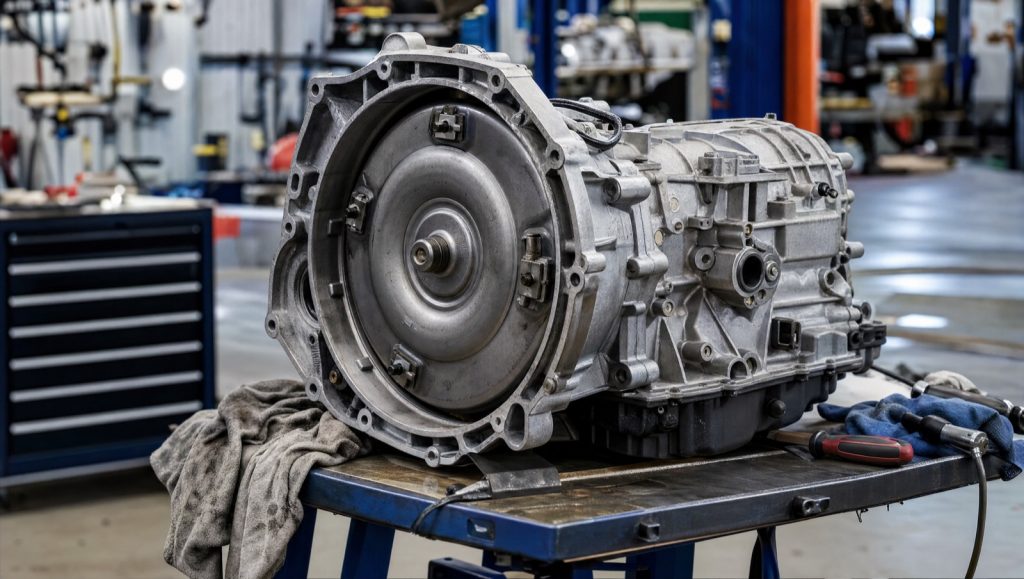
There is a point on every automatic transmission’s life where the answer changes from “service it” to “rebuild it”, and the gap between those two numbers is enormous. What decides which side you land on is almost never the age of the car. It is how long the symptoms were driven with.
Here is what each symptom actually means, the order they arrive in, and where the window closes.
Two very different boxes, one word
“Automatic” covers two designs that fail differently and get confused constantly.
Torque converter automatics, like the ZF units in BMW, Land Rover and Jaguar, use a fluid coupling and a set of clutch packs. They are smooth, tolerant and heavy on fluid condition, because the fluid is doing the coupling as well as the lubricating.
Dual-clutch boxes, the DSG and S tronic in Volkswagen and Audi, are two manual gearboxes in one housing with a clutch each. Faster, more efficient, and much less forgiving about maintenance, because a mechatronic control unit lives inside them bathed in the same fluid as the clutches.
Both have service intervals. Neither is sealed for life, whatever the marketing said a decade ago.
Symptom one: hesitation pulling away
You lift off the brake and there is a beat before the car moves. On a dual-clutch this is the clutch taking longer to find its engagement point. On a torque converter it is usually line pressure taking a moment to build.
Owners adapt to this without noticing, which is why it is almost never the reason someone calls. It is, however, the cheapest moment to act: at this stage a fluid and filter service with an adaptation reset resolves a large share of cases.
Symptom two: a shudder at low speed
Most obvious between first and second under light throttle, in slow traffic and on sloped driveways.
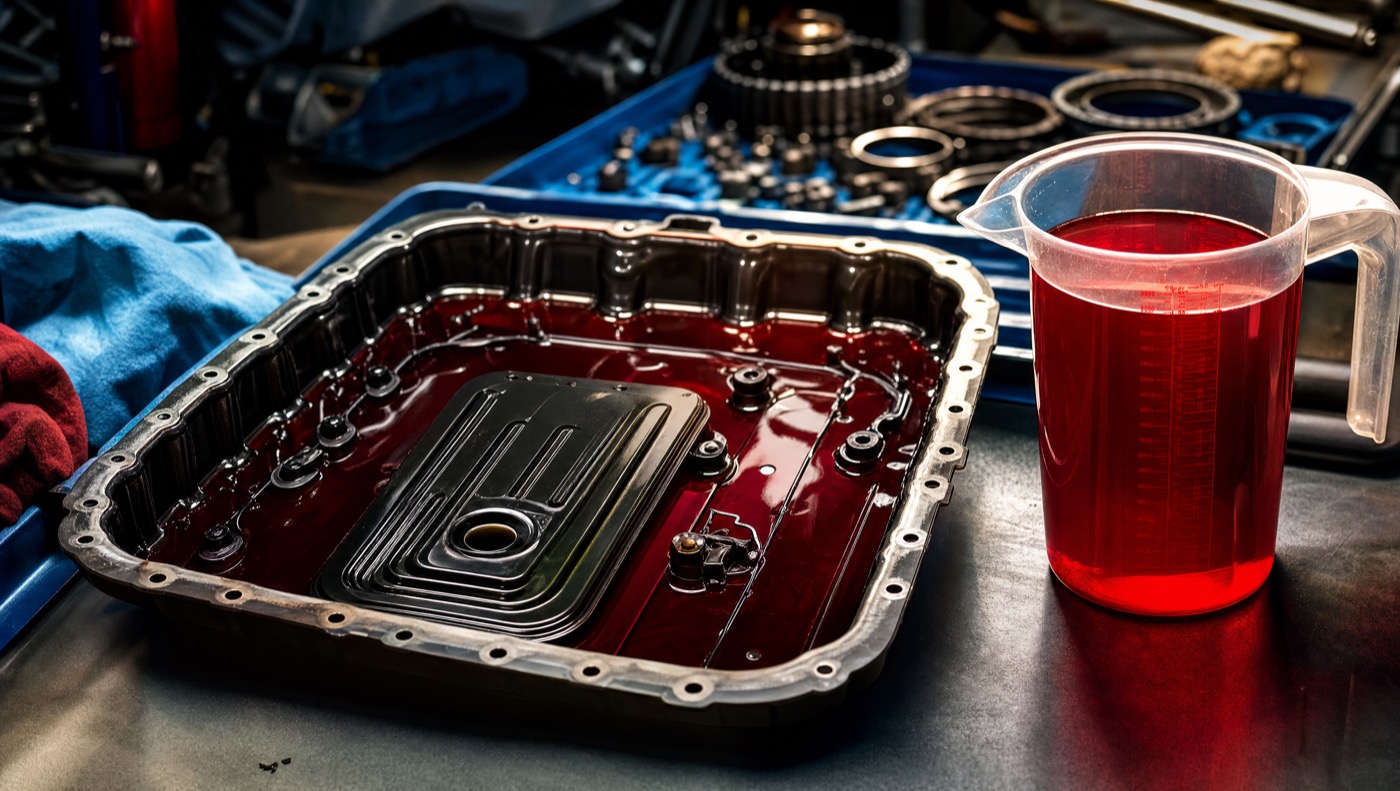
On a dual-clutch it is the clutch pack slipping rather than gripping, usually because degraded fluid is no longer cooling and lubricating it properly. On a torque converter it is often the lock-up clutch shuddering, which produces a vibration people describe as driving over rumble strips at 60 km/h.
This is the last comfortable stage. Fluid, filter and adaptation work still fixes many of these. Ignored, the material coming off the clutch circulates through the system and starts affecting everything the fluid touches.
Symptom three: harsh or jerky downshifts
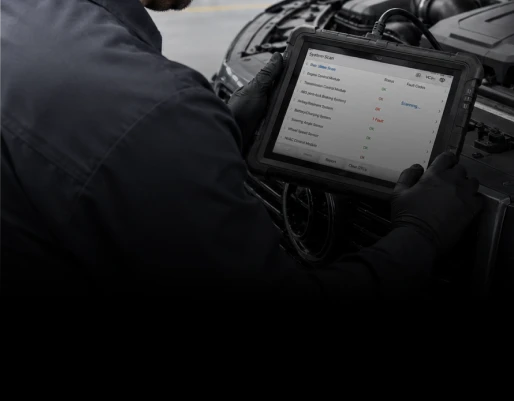
The 2-1 change coming to a stop is the one owners notice. By now the box is compensating hard, and if we read the adaptation values they are usually near the end of their range, which is the transmission’s own record of how much wear it has already absorbed.
The honest conversation at this stage is that a service may improve it and may not, and we will say which we expect before you spend the money rather than after.
Symptom four: a warning light or limp mode
The car refuses anything above third, or a transmission warning appears. On a dual-clutch this often means the mechatronic unit has flagged a fault it cannot work around. On a torque converter it is usually a solenoid or pressure fault.
This is where the conversation becomes a rebuild or a replacement unit, and the number changes by an order of magnitude from stage one.
What a proper transmission service includes
- Old fluid drained, with the quantity checked against what should have come out.
- The filter replaced, not rinsed and refitted, because that is how debris ends back up in the valve body.
- New sump gasket and plug seals.
- Refill with the exact approved fluid for that box, set at operating temperature rather than by eye.
- Adaptation values reset through the diagnostic system, so the box relearns its engagement points with clean fluid.
That last step is the one most often skipped by workshops without the software, and it is why some people believe changing old fluid breaks gearboxes. A box that has spent years compensating for degraded fluid holds values that no longer make sense once the fluid is new. Left alone, it can shift worse afterwards. Reset properly, it does not.
What Brisbane traffic does to a gearbox
Transmissions are happiest moving at a steady speed with the clutches either fully engaged or fully open. What they get here is the opposite.
Stop-start along Sandgate Road means the low-speed clutch is slipping repeatedly rather than locking, and slipping generates heat. Heat degrades fluid. Degraded fluid stops cooling the clutch pack, which generates more heat. Add high ambient temperature for most of the year and a hill start on a Hamilton driveway, and a box on a 60,000 km schedule is doing more work per kilometre than the schedule assumed.
Towing and short trips with a full car land in the same category. It does not make these boxes fragile. It makes the published interval a maximum rather than a target.
How we work out which side of the line you are on
Four things, before any recommendation.
Read the adaptation data. The box keeps its own record of how far it has had to compensate. Values near the limit tell you the clutches are worn regardless of what any invoice says.
Look at the fluid and the sump. Fresh fluid is clear. Fluid at 100,000 km is dark and smells burnt, and a layer of clutch material in the sump tells its own story.
Read the fault memory, including stored intermittent codes the car has cleared itself.
Drive it cold and warm. Symptoms live at the temperature extremes, and a car that behaves on a warm test drive can shudder every morning.
Then you get an honest answer: service and it will very likely be fine, service and it may improve, or the box is past the point where fluid changes anything. Detail on how we run it is on our transmission page.
Two habits worth dropping
Holding the car on the accelerator at a hill. On a slope, using throttle instead of the brake means the clutch is slipping to hold you there, generating heat with no airflow to remove it. Use the brake.
Rocking between D and R in a tight car park. Every direction change engages a clutch from a standstill. Come to a complete stop before selecting the other direction.
Booking it in Albion
We are an independent European workshop at 21 Pedder St, Albion, ten minutes from Ascot, Hamilton and Newstead, and not a dealership. Tell us the model, year and engine when you book, and describe the symptom and when it happens, because cold-only and traffic-only point at different things.
Diagnosis is quoted separately from repair, nothing is done without your approval, and everything we carry out is backed by our 1 year / 10,000 km workshop guarantee. The full list of what we do is on the Brisbane services page.
Common questions
How we quote
You see the quote before anything is touched. If we find something outside the schedule while the car is here, you get a call with the finding, the options and the price, never a longer invoice at pickup.
Diagnosis and repair are quoted separately because they are different work, and you are told what we found whether or not the repair happens here.
Nothing is done without your approval.
Booking in Albion
The workshop is at 21 Pedder St, Albion QLD 4010, minutes from Hamilton, Teneriffe, Newstead, Ascot and Clayfield. We are appointment only, so the technician who starts your car finishes it.
Send us the rego and the odometer, or a photo of the service screen, and we will tell you exactly what is due before you commit to anything.
You see the quote before anything is touched, and every job is backed by a twelve month or 10,000 km guarantee.
What you get back with the car
A stamped logbook where the car has one, an itemised invoice showing parts by number and fluids by specification, and the service written into the car’s own record where the manufacturer keeps one.
Plus a short written list: what is fine, what is wearing with the measurement beside it, and what will need attention in about six months. That last list is the part most owners tell us they had never been given before, and it is what turns car maintenance into something you can plan for rather than react to.
If anything on that list is urgent we say so plainly, and if it can wait we say that too.
My car has never had a transmission service and it drives fine. Do I need one?
If it is past the interval for your box, yes. Driving fine is what it does right up until the shudder starts, and the fluid has been degrading the whole time.
Is it true that changing old fluid can break a gearbox?
What breaks them is doing half the job. Fluid without the filter, or without resetting adaptations, can leave a box shifting worse than before. Done completely, it is maintenance.
How do I know if it is too late for a service?
The adaptation values and the state of the sump tell us. We read both and give you an honest answer before you spend anything.
How long does a transmission service take?
Normally a full day, because the fluid level is set at temperature and the adaptations are run afterwards. We tell you before you leave the car.