The bill for air suspension on a Discovery or Range Rover is not fixed. It depends almost entirely on when the owner books, and the window between the cheap version and the expensive one is usually less than a year. What makes that frustrating is that the car warns you the whole way through, in signals that are easy to dismiss.
Here is the sequence, what each stage costs to put right, and what we test before recommending anything.
What is under the car
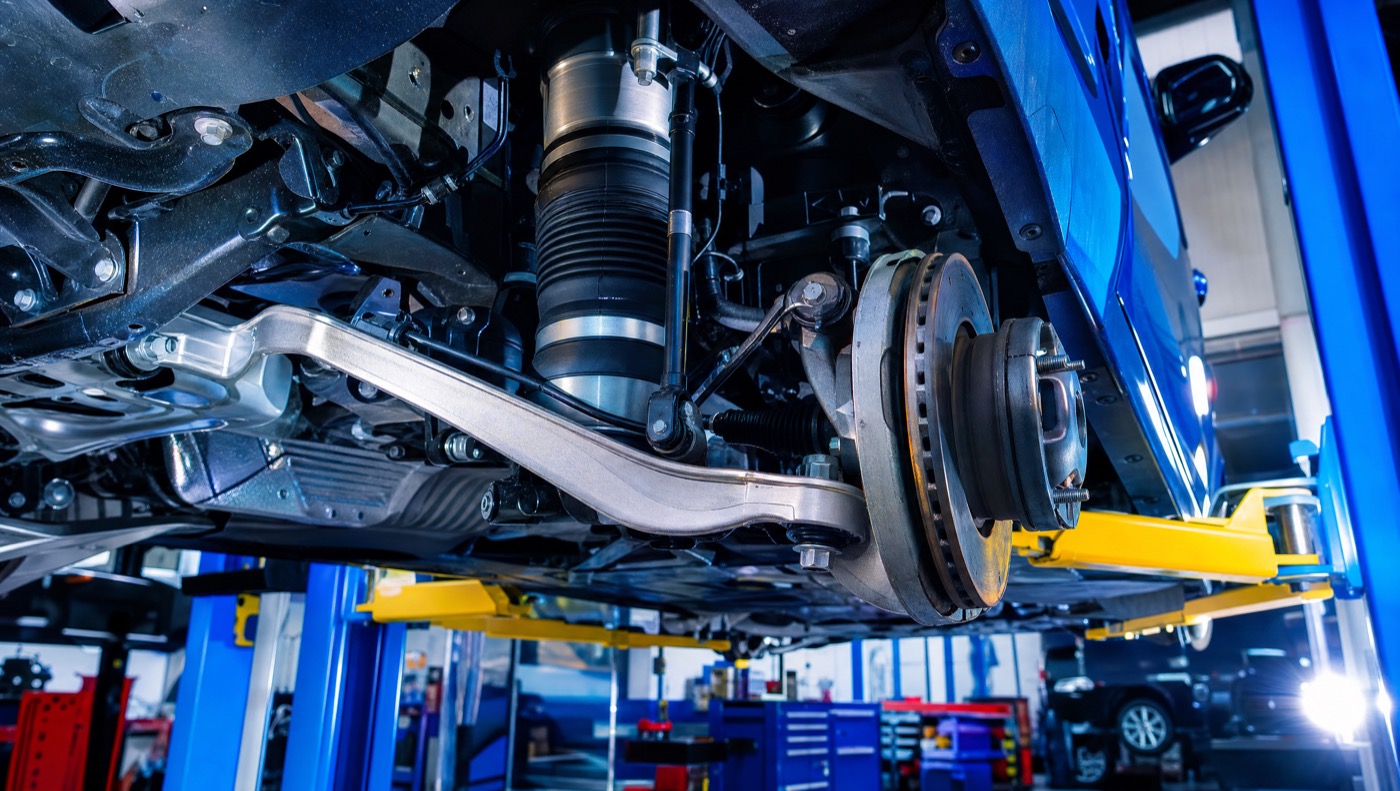
Instead of a steel spring at each corner, an air bag: a rubber and fabric bladder holding pressurised air. A compressor fills the system, a valve block moves air between the corners and a reservoir, and height sensors at each wheel tell the module how the car is sitting.
The module corrects constantly. Load the boot and it lifts the rear. Park on a slope and it levels. Drive at speed and it lowers the car. That constant activity is the point, and it is exactly why a small leak stays invisible: the compressor works a little harder and the car looks perfectly normal.
Stage one: low in the morning
The first honest symptom, and the cheapest moment to act.
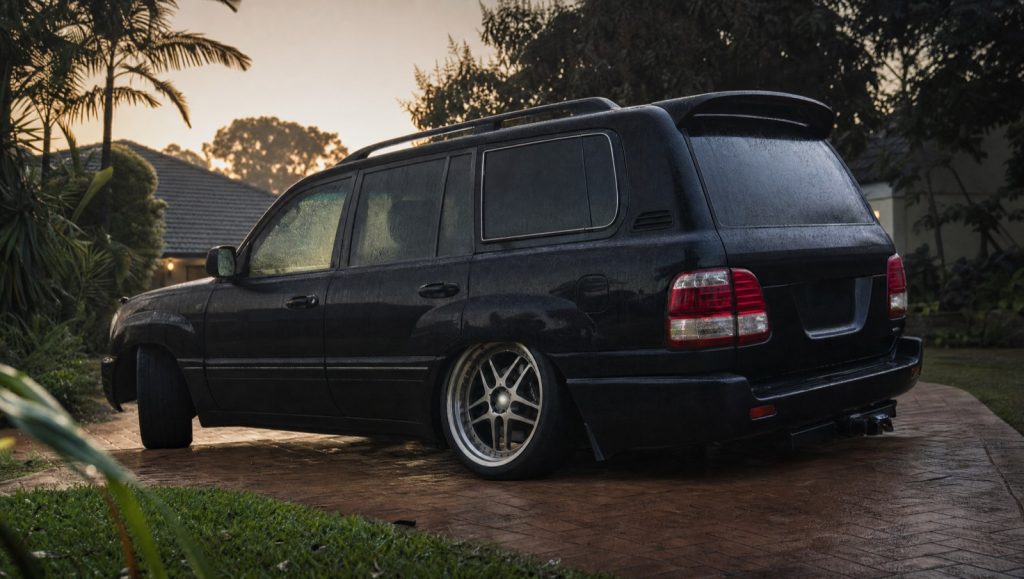
You come out after a night in the garage and the car is sitting lower than usual, on one corner or across an axle. Start it, wait half a minute, and it rises back to normal. Nothing feels different on the road, so it gets filed under quirks.
What it means is air escaping while the car sleeps. Usually a bag with a porous patch, sometimes a valve block seal, occasionally a line fitting. At this point the repair is the leaking part, and everything else in the system is still healthy.
Stage two: the compressor is covering for it
The system compensates by running the compressor more often and for longer, and you can hear it: a whirring after start-up that lasts longer than it used to, or that runs while the car is parked.
Compressors are built for duty cycles measured in seconds, and they are cooled by their own housing. One covering a leak overheats, and heat destroys the piston seal and, on many units, the dryer along with it. Brisbane makes this worse: an engine bay at forty degrees in February gives a hard-working compressor nowhere to shed heat.
Fix the leak here and you may still save the compressor. This is where the bill goes one way or the other.

Stage three: moisture in the system
Every air suspension system has a desiccant dryer that pulls moisture out of the air before it reaches the bags. Its life depends on how much air passes through it.
A compressor running three times its normal duty pushes three times the air through that dryer. When the desiccant saturates, moisture starts moving into the system, and moisture corrodes valve blocks from the inside and attacks the rubber it sits against. In a humid climate the air going in is wetter to begin with, so the dryer has less margin than the designers assumed.
The repair list has now grown from one bag to a bag, a compressor and a dryer, with the valve block as an open question.
Stage four: it will not lift
A warning appears, the car settles onto its bump stops and either refuses to rise or lifts and drops again. Now the whole system is in play, and often a tow, because driving a Land Rover on its stops damages driveshafts and CV boots.
How we diagnose it
“Air suspension fault” is not a diagnosis. There are four or five distinct components in that system and they fail differently, so guessing is expensive.
We read the module for stored faults and, more usefully, for compressor run-time data, which the car records. Then the system is pressurised and each corner tested for hold, with height sensor values watched live to see which corner is dropping and how fast. Leak detection fluid finds the porous patch on a bag. A corner that holds pressure while the one next to it drops points at the valve block rather than the bag.
That is a couple of hours of work and it is what prevents the common alternative: four new bags fitted on the theory that they were all tired, when one bag and a seal was the real fault. Diagnosis is quoted separately, and you see the evidence before anything is replaced. Detail is on the suspension page.
What else gets checked while it is up
An air suspension job is a good moment to look at the parts that wear on the same roads: bushes and drop links, which produce the knock owners often blame on the air system; height sensor linkages, which are plastic and break; and the wiring at the sensors, which lives in the wheel arch and takes everything the road throws at it.
Ride height calibration matters too. A car that has had a sensor replaced without recalibration sits wrong and wears tyres unevenly for years afterwards, and nobody connects the two.
The conversion question
Steel spring conversion kits exist and they are cheaper than a full system repair. Our honest view for most owners is no.
You lose ride height adjustment, load levelling and a large part of the ride quality you paid for. On many models the module keeps reporting a fault. And resale takes a real hit, because the next buyer knows exactly what has been removed. On a very old, high-kilometre car being kept purely as a workhorse it can be the right answer, and we will say so if that is your situation.
Two habits that shorten the system’s life
Leaving the car in access height in the garage. The lowest setting keeps the bags at their most compressed, and rubber that sits folded for days takes a set. Park it at normal ride height.
Raising the car to clear the same driveway twice a day. Occasionally is fine. As a daily habit it means the compressor runs a full cycle on demand rather than the small top-ups it was designed for, and duty cycle is what kills compressors. If your driveway needs it every time, mention that when you book.
Booking it in Albion
We are an independent European workshop at 21 Pedder St, Albion, ten minutes from Ascot, Hamilton and Newstead, and not a dealership. If your car sits low overnight, if the compressor runs longer than it used to, or if a warning has appeared, say which when you book so we can plan the time.
Diagnosis and repair are quoted separately, nothing is replaced on suspicion, and everything we fit carries our 1 year / 10,000 km workshop guarantee. The full list of what we do is on the Brisbane services page.
Common questions
Numbers, not opinions
Every recommendation we make comes with a measurement attached. Brake pad and disc thickness against the manufacturer minimum, tyre tread by corner with the wear pattern noted, battery state of health, coolant strength and any oil seepage photographed.
That is what lets you decide whether to act now or at the next service instead of taking a verdict on trust, and it is what lets us tell you honestly that something can wait.
The numbers go on your report, so the next visit starts from a record rather than from memory.
Booking in Albion
The workshop is at 21 Pedder St, Albion QLD 4010, minutes from Hamilton, Teneriffe, Newstead, Ascot and Clayfield. We are appointment only, so the technician who starts your car finishes it.
Send us the rego and the odometer, or a photo of the service screen, and we will tell you exactly what is due before you commit to anything.
You see the quote before anything is touched, and every job is backed by a twelve month or 10,000 km guarantee.
What you get back with the car
A stamped logbook where the car has one, an itemised invoice showing parts by number and fluids by specification, and the service written into the car’s own record where the manufacturer keeps one.
Plus a short written list: what is fine, what is wearing with the measurement beside it, and what will need attention in about six months. That last list is the part most owners tell us they had never been given before, and it is what turns car maintenance into something you can plan for rather than react to.
If anything on that list is urgent we say so plainly, and if it can wait we say that too.
The car drops overnight but lifts fine. Can I leave it?
You can, and the repair grows while you do. That symptom is a leak the compressor is covering, and the compressor is the expensive part it takes down with it.
Do all four bags need replacing together?
Not necessarily. We test each corner and show you which is leaking. Replacing all four by default is common elsewhere and it is usually more than the car needs.
Is it safe to drive a car that has dropped?
Not far. On the bump stops you risk driveshafts and CV boots, and the handling changes considerably. Call us rather than driving it in.
How long does the work take?
Diagnosis is usually a couple of hours. A single bag with recalibration is normally a day, and we tell you what we found before any repair begins.