The car looks right. The photos are good, the kilometres are believable, the seller sounds reasonable, and the price is only a little above what you wanted to spend. The next decision is whether to spend a few hundred dollars finding out what you are buying, or to save that and hope.
On a used European car, that is the highest-return money in the whole transaction. Here is exactly what gets checked, in the order it matters, and what each finding is worth when you go back to the seller.
1. What the car says about its own service history
Before anything mechanical, we read the vehicle. Modern European cars keep their service history internally, written against the VIN, and it does not always match the folder in the glovebox. A car advertised as “full service history” whose internal record shows a three-year gap is a different car from the one in the ad, and you want that before you negotiate.
2. Every module, not just the engine
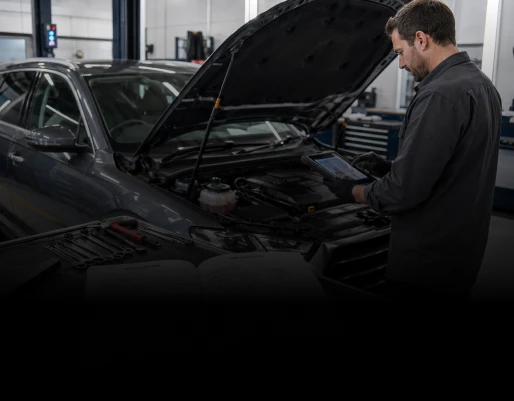
A full fault memory read across engine, transmission, ABS, airbag, body, comfort, gateway and battery management. What matters most is not the active faults, it is the stored intermittent ones: codes the car logged and cleared by itself. Those are the next problem announcing itself months early, and no test drive will surface them.
3. Oil condition, level and, on diesels, dilution
An over-full sump on a diesel is rarely generosity. It usually means fuel is finding its way into the oil because the particulate filter has not been completing regenerations, which tells you how the car has been used. In this city, where a lot of cars only do short runs, that is one of the more common findings and one of the few that can end a purchase on its own.
4. Coolant, with a pressure test
A slow coolant loss with nothing visible on the driveway is among the most common European faults we find, and it is invisible on a cold car in a seller’s carport. Pressurising the system either clears it or finds the leak, and on the VW and Audi 2.0 TFSI family the water pump and thermostat housing are known wear points.
5. Brake material, measured
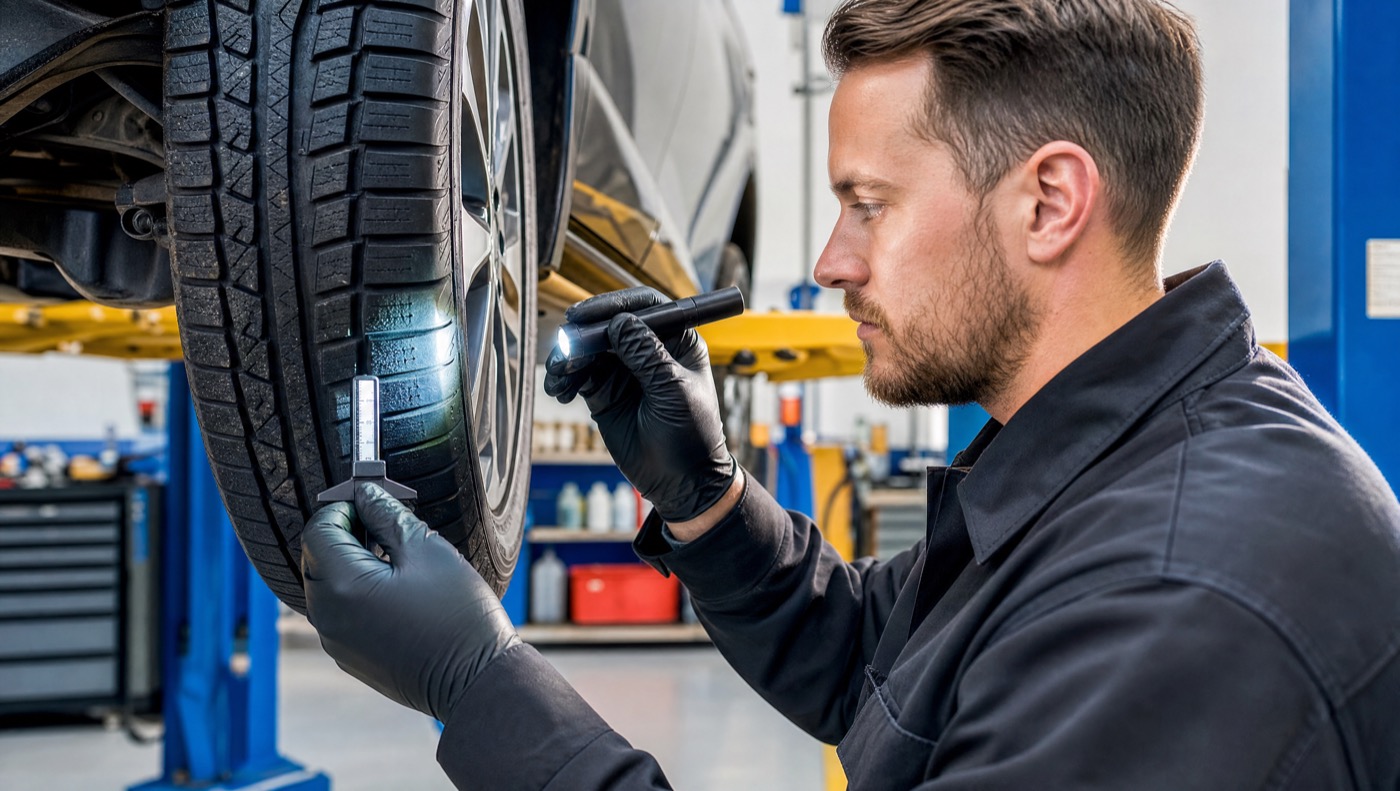
Pads with a gauge, discs against the minimum thickness stamped on them. The number tells you whether you are buying a car or a car plus a brake job, and on anything with an electronic parking brake that job is not a cheap afternoon.
6. Suspension with the weight off the wheels
Worn control arm bushes, drop links and tired dampers rarely announce themselves on twenty minutes of smooth road. On the hoist they are obvious in half a minute. On cars with air suspension the check is different again, because those systems hide their condition until they do not, and the first honest symptom is a car that sits low after a night parked.
7. Tyres as a set, with dates
Four tyres of four brands and three different ages says as much about the previous owner as about the rubber. Wear on one edge points at alignment or at the bushes above. Run-flats, common on BMW, hide shoulder wear behind a stiff sidewall, and in this climate a tyre that is five years old has hardened whatever the tread depth says.
8. Evidence of repair
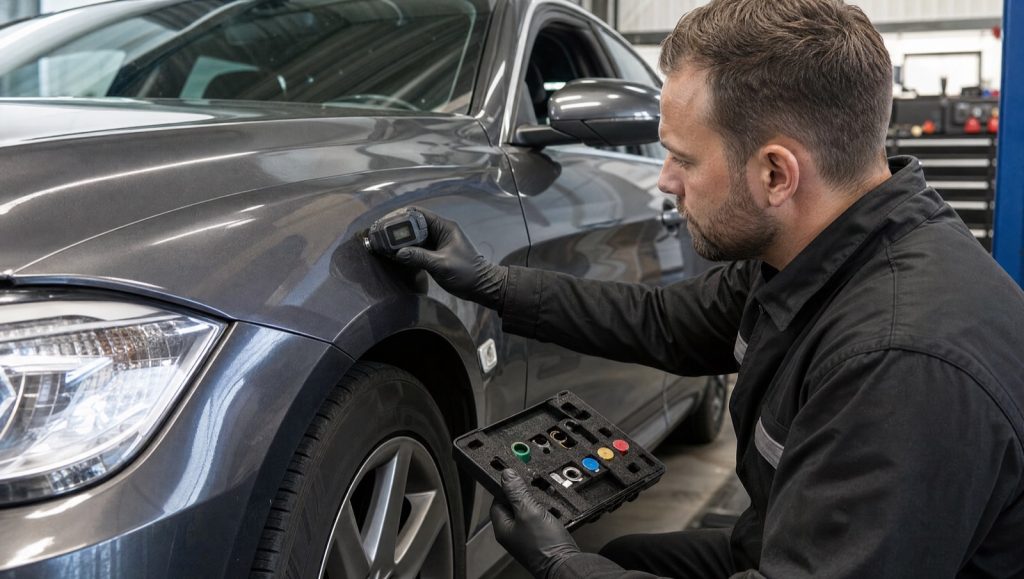
Panel gaps, paint depth readings, overspray in door shuts, fasteners that have been turned, replacement clips, a bonnet that has been off. None of that means the car is bad, and a properly repaired car can be a very good buy. It means there is a history nobody volunteered, and you are entitled to it before you pay.
9. Underbody and structure
Damage from speed humps and steep driveways, crushed sills from bad jacking, missing or hanging undertrays. An undertray that is half detached changes airflow to the radiator, which matters here in February more than it would somewhere cooler.
10. The gearbox, cold and warm, in traffic
Dual-clutch and torque converter boxes behave differently at different temperatures. We drive them in both states and watch for the three symptoms in order: hesitation pulling away, a shudder between first and second under light throttle, and a jerk on the 2-1 downshift. Those three, on a car with no gearbox service history, are a specific and expensive conversation. More on our transmission page.
11. Electrical behaviour and battery health
State of health, not voltage. A weak battery on a modern European car produces faults across the entire vehicle that look like anything except a battery. We also check whether the modules are going to sleep, because a parasitic drain is a fault you inherit along with the keys.
12. The arithmetic at the end
The last check is not a check. We put every finding into two lists: what the car needs now to be safe and reliable, and what it will need within twelve months. Timing chain condition, upcoming brakes and tyres, gearbox service due, suspension on the way out.
That second list is what most buyers have never seen, and it is what turns an asking price into a real price.
Three cars we would think twice about
The very low kilometre car with no history. Forty thousand on a seven-year-old European car sounds like a find until you count what has been sitting still. Brake fluid absorbs water by the year, tyres harden by date, and a gearbox that has never had fluid because “it has barely been driven” is on the same clock as one that has.
The car that was “just serviced” last week. Sometimes generous, often a fresh oil change used to reset a light and quiet a symptom before the photos. Fresh oil hides consumption, a cleared fault memory hides months of history, and a topped-up cooling system hides a slow leak for a few weeks. We read the car, not the receipt.
Two owners in eighteen months. Not a fault by itself, but it deserves a question. Cars that move quickly through hands often move because something disappointed, and the current seller may not have owned it long enough to know what.
What you do with the report
You get it in writing, with a quote for anything we found, and you decide. Three outcomes are all normal: the car is sound and you buy with confidence; the car needs work and you go back with an itemised number instead of a vague “it needs some things”; or the fault is serious enough that the right answer is to keep looking, which we will say plainly, because a report that never says no is not worth commissioning.
We do not use the inspection as a funnel into work you did not ask for. If you buy it and want the repairs done here, they are quoted separately and carry our 1 year / 10,000 km workshop guarantee.
The inspection this is not
A Queensland Safety Certificate is a different job. That one confirms minimum safety standards on the day: tyres, brakes, lights, steering, seat belts, windscreen. A car with a tired gearbox, an oil leak and a fault memory full of stored codes can hold a perfectly valid certificate. Both are done here and both are explained on our inspection page, quoted separately because they answer different questions.
Booking it in Albion
We are an independent European workshop at 21 Pedder St, Albion, ten minutes from Ascot, Hamilton and Newstead, and we inspect cars we have never seen before every week. Book it in your name, arrange the time with the seller, and tell us the make, model and year so the right software is ready.
Common questions
Numbers, not opinions
Every recommendation we make comes with a measurement attached. Brake pad and disc thickness against the manufacturer minimum, tyre tread by corner with the wear pattern noted, battery state of health, coolant strength and any oil seepage photographed.
That is what lets you decide whether to act now or at the next service instead of taking a verdict on trust, and it is what lets us tell you honestly that something can wait.
The numbers go on your report, so the next visit starts from a record rather than from memory.
Booking in Albion
The workshop is at 21 Pedder St, Albion QLD 4010, minutes from Hamilton, Teneriffe, Newstead, Ascot and Clayfield. We are appointment only, so the technician who starts your car finishes it.
Send us the rego and the odometer, or a photo of the service screen, and we will tell you exactly what is due before you commit to anything.
You see the quote before anything is touched, and every job is backed by a twelve month or 10,000 km guarantee.
How long does an inspection take?
Plan on a few hours with the car here. Most of the work is on the hoist with the diagnostic software connected, and rushing it is how things get missed.
Can you inspect it at the seller’s place?
Most of what matters needs a hoist and manufacturer-level software, so the car has to come to us. A seller who refuses that is telling you something worth listening to.
Is it worth inspecting a car still under factory warranty?
Often yes. Warranty covers defects, not wear, and not the tyres, brakes, fluids and service items you will pay for in the first year.
How quickly can you fit one in?
We are by appointment only and most weeks have same-week availability. Tell us when you need it, because private sales move fast.