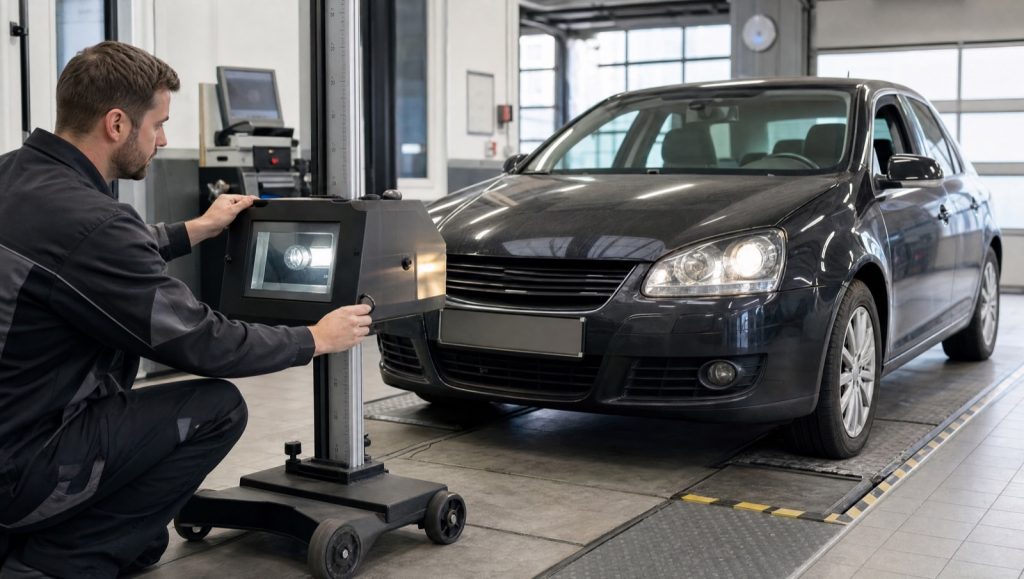
Two different inspections get confused with each other every week in Queensland, and the confusion costs people real money. One is the safety certificate, the piece of paper the state asks for when a registered light vehicle changes hands. The other is a pre-purchase inspection, which is what you commission before you hand over money for a used European car. They are not the same document, they do not check the same things, and one of them will not tell you whether the car you are about to buy is a good one.
Here is what each one actually is, what it covers, and how to decide which you need.
What a safety certificate is, in plain terms
A safety certificate certifies that a vehicle has been inspected and meets the minimum safety standards set by Queensland’s Department of Transport and Main Roads. It is required when you sell a registered light vehicle, and it is issued only by an approved inspection station. For a private seller it is valid for two months or 2,000 km, whichever comes first.
The important words in that paragraph are minimum and safety. The inspection looks at the items that decide whether a car is safe to be on the road right now: brakes, steering and suspension components, tyres, lights, seat belts, the windscreen, the exhaust, and the structure of the body. If the tyres are down to the wear markers or the windscreen is cracked in the driver’s line of sight, the car does not meet the standard and it does not pass.
What it does not do is assess how long the car will last. Transport and Main Roads says this in as many words: a safety certificate inspection is not a comprehensive mechanical inspection of the quality or life expectancy of the vehicle. A car with a tired gearbox, a slipping clutch, an engine burning oil and a fault memory full of stored codes can hold a valid safety certificate, because none of those things is a minimum safety item.
That gap is the whole reason the second inspection exists.
What a pre-purchase inspection looks at instead
A pre-purchase inspection asks a different question. Not “is this legal to drive”, but “what will this car cost me over the next two years, and is the asking price right”.
On a European car, that question is answered mostly with a laptop and a lift, not a torch and a clipboard. What we look at:
- The full fault memory, module by module. Not a generic code reader, which sees engine faults and little else. Manufacturer-level software reads every control unit, and stored intermittent faults are the ones that tell you what is coming.
- Service data against the VIN. Modern European cars record their own service history internally. That record does not always agree with the folder of invoices handed to you at the inspection, and the discrepancy is worth knowing about before you pay.
- Oil condition and level, and on diesels, oil dilution. Fuel finding its way into the sump on a car that only ever does short trips is a story about how the car has been used, and it does not show up on a test drive.
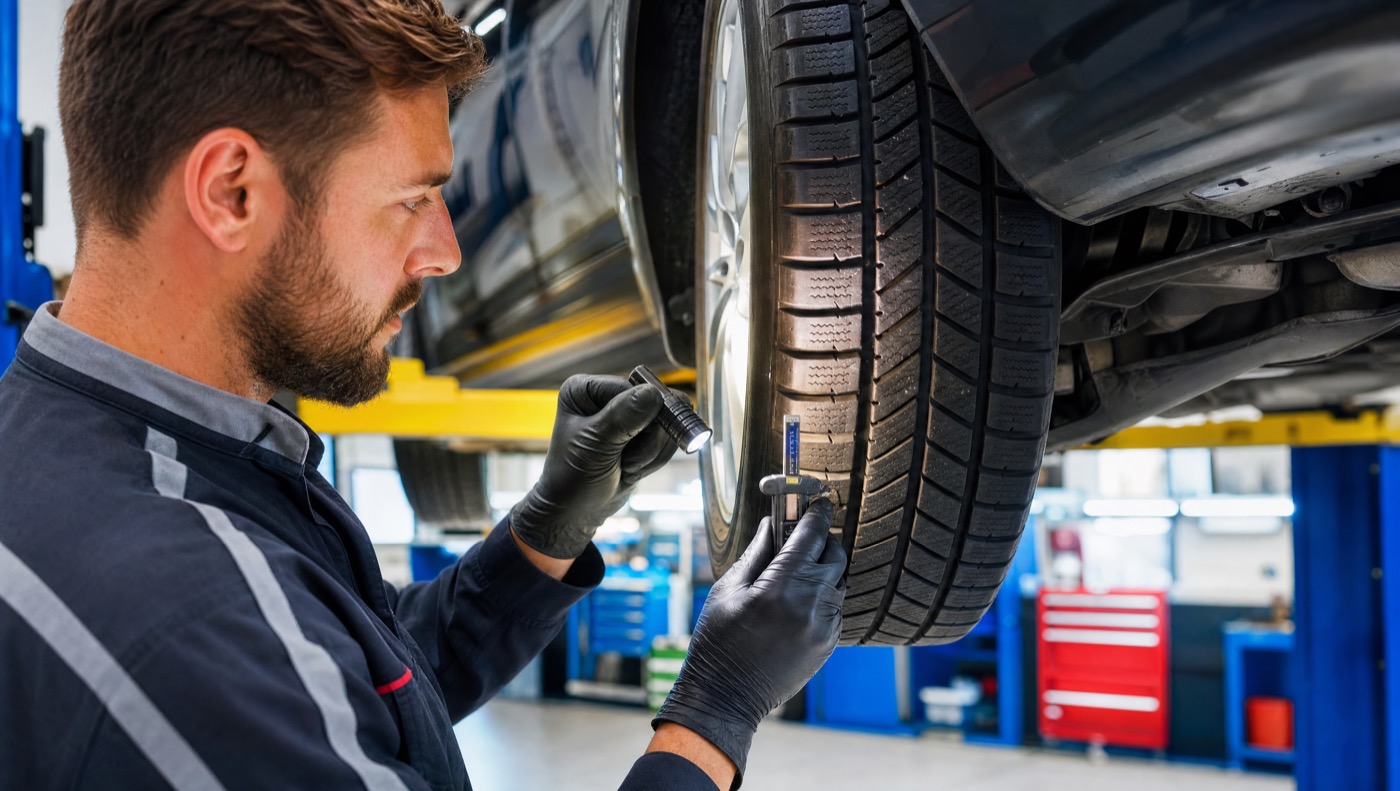
- Brake material actually measured, not estimated by eye through a wheel. The number tells you whether you are buying a car or a car plus a brake job.
- Suspension and bushes with the weight off the wheels. Air suspension in particular hides its condition well until it fails, and it fails expensively.
- Coolant and cooling system pressure test. A slow loss with nothing on the driveway is one of the most common European faults we see, and one of the easiest to miss.
- Evidence of repair. Panel gaps, paint depth, fastener marks and overspray tell you about a history nobody volunteered.
- Tyres as a set, including dates and matched brands. Four different tyres of four different ages is information about the previous owner, not just about rubber.
The output is a written report, and a quote for anything we found. That last part is what makes it useful: you walk into the negotiation knowing what the car needs and what it costs, rather than knowing only that something “should be looked at”.
The three situations, and what each one needs
You are selling. You need a safety certificate, and you need it dated close to the sale, because the clock starts at issue. Get any obvious fail items sorted before the inspection rather than after: worn tyres, a blown globe, a cracked windscreen and worn wipers are the four that account for most of the failures we see, and all four are cheaper to fix on your own schedule than under time pressure with a buyer waiting.
You are buying privately. The seller’s safety certificate tells you the car met minimum standards on the day it was issued. It tells you nothing about the gearbox, the turbo, the timing chain or the electronics. If the car is a European make and the price is in five figures, a pre-purchase inspection is the cheapest money you will spend on it.
You are buying from a dealer. The car will come with a certificate and often a statutory warranty, and the temptation is to assume the inspection has been done for you. It has not, in the sense that matters. A dealer’s obligation is the same minimum standard, and the pre-purchase inspection still answers the question the certificate does not.
Why European cars deserve the extra step
The reason we push this harder for European cars than we would for a five-year-old commuter is not brand snobbery. It is that the cost of the faults is asymmetric.
An air suspension system that is on its way out is a four-figure repair, and its early symptom is a car that sits slightly low after sitting overnight, which nobody notices on a twenty-minute test drive. A DSG gearbox that has never had its fluid changed will give you a shudder pulling away long before it gives you a warning light. A diesel particulate filter that has been failing to regenerate for two years is a bill that arrives all at once. A stored fault from a module that is intermittently dropping off the network takes ten minutes to find with the right software and can take three visits to find without it.
None of those is visible on a walk-around, and none of them stops a car from passing a safety inspection. They are exactly what a pre-purchase report exists to surface. If you want the detail of how we run it, it is on the safety certificate and inspection page.
What we do with what we find
We quote the findings in two groups: what the car needs now to be safe and reliable, and what it will need within the next twelve months. Owners use the first list to decide whether to buy at all, and the second to decide what to offer.
Nothing gets done without your approval, and we do not use the report as a sales funnel into work you did not ask for. If the answer is “this car is sound, buy it”, that is a perfectly good result and we will say so plainly. We are an independent European workshop in Albion, not a dealership, and the report is the product.
If you do buy the car and want the recommended work done, everything we carry out is backed by our 1 year / 10,000 km workshop guarantee. You can see the full list of what we do at the Brisbane workshop, ten minutes from Ascot, Hamilton and Newstead, with easy parking and someone who will walk you through the findings rather than email you a PDF and disappear.
Common questions
Booking in Albion
The workshop is at 21 Pedder St, Albion QLD 4010, minutes from Hamilton, Teneriffe, Newstead, Ascot and Clayfield. We are appointment only, which means the technician who starts your car finishes it rather than moving between six jobs.
Send us the rego and the odometer, or a photo of the service screen in the car, and we will tell you exactly what is due before you commit to anything. If the car is not drivable, call 1300 093 121 and we will work out the fastest option.
You see the quote before anything is touched, nothing happens without your approval, and every job is backed by a twelve month or 10,000 km guarantee.
Numbers, not opinions
Every recommendation we make comes with a measurement attached. Brake pad and disc thickness against the manufacturer minimum, tyre tread by corner with the wear pattern noted, battery state of health, coolant strength and any oil seepage photographed.
That is what lets you decide whether to act now or at the next service instead of taking a verdict on trust, and it is what lets us tell you honestly that something can wait.
The numbers go on your report, so the next visit starts from a record rather than from memory.