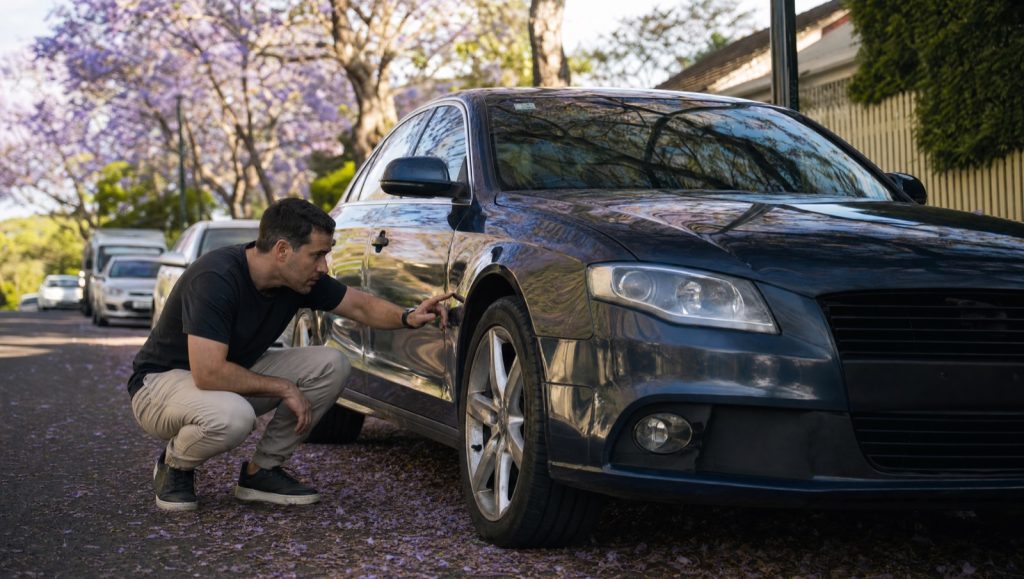
A test drive is twenty minutes on roads the seller chose, in a car that has been warmed up before you arrived. It tells you whether you like how it feels. It is remarkably bad at telling you what the car will cost you.
That gap is not the buyer’s fault. Almost everything that decides the ownership cost of a used European car is invisible from the driver’s seat, and several of the most expensive faults are actively easier to miss when the car is warm and the drive is short. Here is what actually hides from a test drive, and where it shows up instead.
The cold start you never see
Sellers warm cars up. It is not always deceit, sometimes it is courtesy, but the effect is the same: you miss the most informative sixty seconds in the car’s day.
A cold start is when a tired timing chain rattles before the tensioner takes up pressure. It is when a failing hydraulic mount shakes the whole car. It is when a diesel that has been running with fuel diluted oil smokes for a few seconds. It is when a battery that reads fine at rest reveals that it cannot actually turn the engine over cleanly.
If you can, arrange to arrive before the car is started. If you cannot, that is one of the things an inspection replaces: we can read what the car recorded at start-up even when we did not witness it.
Oil dilution, which no drive will reveal
On a diesel that lives on short trips, the particulate filter never completes its regeneration cycle. Unburnt fuel washes past the rings and ends up in the sump. The oil level appears to rise, the oil itself thins out, and the engine is being lubricated by something that is no longer really oil.
The car drives normally. There is often no warning light. The only way to know is to look at the oil, read the filter load figure, and check whether the car has been completing regenerations. A buyer who skips that inherits both a filter approaching replacement and an engine that has been running on diluted oil for a year.

The gearbox that behaves for twenty minutes
Dual-clutch transmissions are at their best warm and moving. Their symptoms live at the two ends nobody tests: the first pull away from cold, and slow crawling traffic.
The sequence is always the same. A hesitation leaving a standstill, then a shudder between first and second under light throttle, then a jerk on the 2-1 downshift as you stop. A seller who takes you on a loop of open roads may not be hiding anything and you will still see none of it.
We drive them cold and warm, in traffic, and we read the adaptation values, which record how far the box has already had to compensate. There is more on that on our transmission page.
The stored faults the dashboard is not showing
Modern cars log faults they have decided not to warn you about yet: an intermittent module dropout, a sensor reading out of range on three occasions last month, a misfire counter creeping on one cylinder.
The dashboard stays clean. The memory does not. Reading every module rather than just the engine is how you find out that the car you are about to buy has been quietly reporting the same fault since autumn.
Service history the seller does not have
Two kinds of history exist. The folder, and the record the car keeps against its own VIN.
When those two disagree, the car is telling the truth. A vehicle showing a three-year gap in its internal record, sold as “full service history”, is not necessarily a scam: owners lose paperwork, and workshops without the right software sometimes fail to write the event. But it changes what you are buying, and it changes what the next buyer will find when you sell.
Cooling systems that only leak when hot and pressurised
A slow coolant loss with nothing on the driveway is one of the most common European faults we see, and it is invisible cold. The system has to be pressurised to find it, which takes minutes on a hoist and cannot be done in a seller’s driveway.
On the 2.0 TFSI family in particular, the water pump and thermostat housing are a known wear point. Finding it before you buy turns a surprise into a line in the negotiation.
Suspension that feels fine on smooth roads
Tired bushes and worn drop links announce themselves over speed humps and rough surfaces, not on the arterial road the seller picked. With the weight off the wheels they are obvious in thirty seconds.
Air suspension deserves its own warning. It hides its condition well: the system compensates until it cannot, and the first honest symptom is a car that sits low after a night parked. If the seller’s car is level when you arrive and has been running for ten minutes, you have learned nothing about the air suspension at all.
Repairs nobody mentioned
Paint depth readings, panel gaps, overspray in door shuts, fasteners that have been turned, replacement clips, a bonnet that has been off. None of this means the car is bad, and a properly repaired car can be an excellent buy.
What matters is that you know, because it affects both the price you should pay and the price you will get. Finding out at resale, from someone else’s inspector, is the expensive version of this discovery.
What this is worth in the negotiation
The practical value of an inspection is not the veto. Most cars pass. The value is the itemised list.
“It needs a few things” is an argument you lose. “It needs rear pads and discs, a coolant leak repaired at the thermostat housing, and a DSG service that has never been done, here is the quote” is a number the seller can either accept, split, or refuse. All three outcomes are better than not knowing.
And when the report comes back clean, you stop wondering. That is worth something too, particularly on a car you are about to keep for five years.
Booking it in Artarmon
We are an independent European workshop, not a dealership, minutes from Chatswood, St Leonards and Crows Nest, and we inspect cars we have never seen before every week. Book it in your name, arrange the time with the seller, and tell us the make, model and year so the right software is ready.
You get a written report and a quote for anything we find, and nothing gets done to the car. The detail of how the inspection runs is on our inspection page.
Common questions
Why we measure instead of estimating
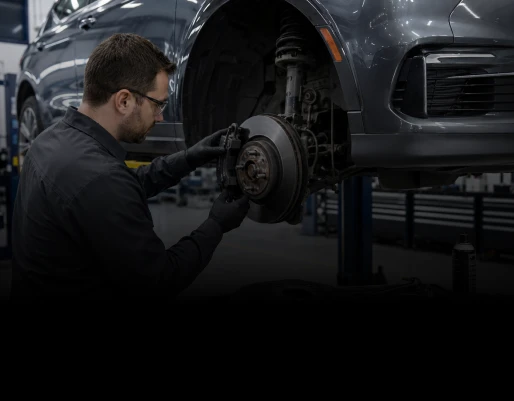
Almost every recommendation we make comes with a number attached. Brake pad and disc thickness in millimetres against the manufacturer minimum, tyre tread by corner with the wear pattern noted, battery state of health, and coolant strength.
That matters because a pad at 5 mm and a pad at 3 mm both look fine through a wheel and mean completely different things for your next six months. With the number in front of you, you can decide whether to act now or at the next service instead of taking a verdict on trust.
It is also what lets us tell you honestly that something can wait. A workshop that never says that is not measuring.
Booking in Artarmon
The workshop is at 1/39 Hotham Parade, Artarmon NSW 2064, minutes from Chatswood, Lane Cove, St Leonards and Crows Nest. We are appointment only, which means the technician who starts your car finishes it rather than moving between six jobs.
Send us the rego and the odometer, or a photo of the service screen in the car, and we will tell you exactly what is due before you commit to anything. If the car is not drivable, call 1300 136 825 and we will work out the fastest option.
You see the quote before anything is touched, nothing happens without your approval, and every job is backed by a twelve month or 10,000 km guarantee.
The seller says the car has just been serviced. Do I still need an inspection?
Yes. A fresh oil change resets warning lights and hides consumption, and a recently cleared fault memory hides months of history. We read the car rather than the receipt.
Can you inspect a car at the seller’s address?
Most of what matters needs a hoist and diagnostic software, so the car has to come to us. Sellers who refuse that are telling you something worth listening to.
Is it worth inspecting a car still under factory warranty?
Often yes. Warranty covers defects, not wear, and not the tyres, brakes, fluids or service items you will pay for in the first year.
How quickly can you fit one in?
We are by appointment only, and most weeks have same-week availability. Tell us when you need it, because private sales move fast.