You have found the car. The photos are good, the kilometres are believable, the seller sounds reasonable and the price is only slightly more than you wanted to spend. The next decision is whether to spend a few hundred dollars finding out what you are actually buying, or to save that and hope.
On a used European car, that is the highest-return few hundred dollars in the whole transaction. Here is exactly what we look at, in the order it matters, and what each finding is worth when you go back to the seller.
1. The service record inside the car
Before anything mechanical, we read the vehicle itself. Modern European cars keep their own service history written against the VIN, and it does not always match the folder in the glovebox. A car sold as “full service history” whose internal record shows a three-year gap is a different car from the one in the advertisement, and you want to know that before you negotiate, not after.
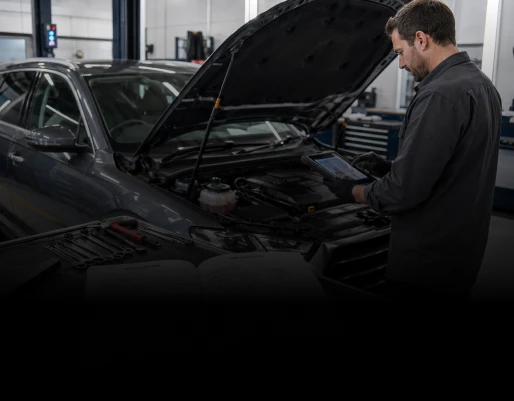
2. The full fault memory, module by module
Not an engine code scan. Every control unit: engine, transmission, ABS, airbag, body, comfort, infotermation, battery management. What we are looking for is not just active faults but stored intermittent ones, the codes the car logged and cleared by itself. Those are the next problem announcing itself months early, and they are invisible on a test drive.
3. Oil condition, level and, on diesels, dilution
Oil that is over-full on a diesel is usually not generosity, it is fuel finding its way into the sump because the particulate filter has been failing to regenerate. That is a story about how the car has been used, and it is one of the few findings that can turn a good buy into a walk-away on its own.
4. Coolant, and a pressure test
A slow coolant loss with nothing visible on the driveway is one of the most common European faults we find, and one of the easiest to miss. On the VW and Audi 2.0 TFSI family the water pump and thermostat housing are a known wear point. Pressure testing takes minutes and it either clears the system or finds the leak.
5. Brake material, measured
Pads with a gauge, discs against the minimum thickness stamped on them. The number matters because it tells you whether you are buying a car or a car plus a brake job. On a European car with electronic parking brakes, that job is not a cheap afternoon.
6. Suspension and bushes, with the weight off the wheels
Worn control arm bushes, drop links and tired shock absorbers do not always announce themselves on a twenty-minute drive on smooth roads. On the hoist, they are obvious. On cars with air suspension the check is different again, because those systems hide their condition well right up until they do not.
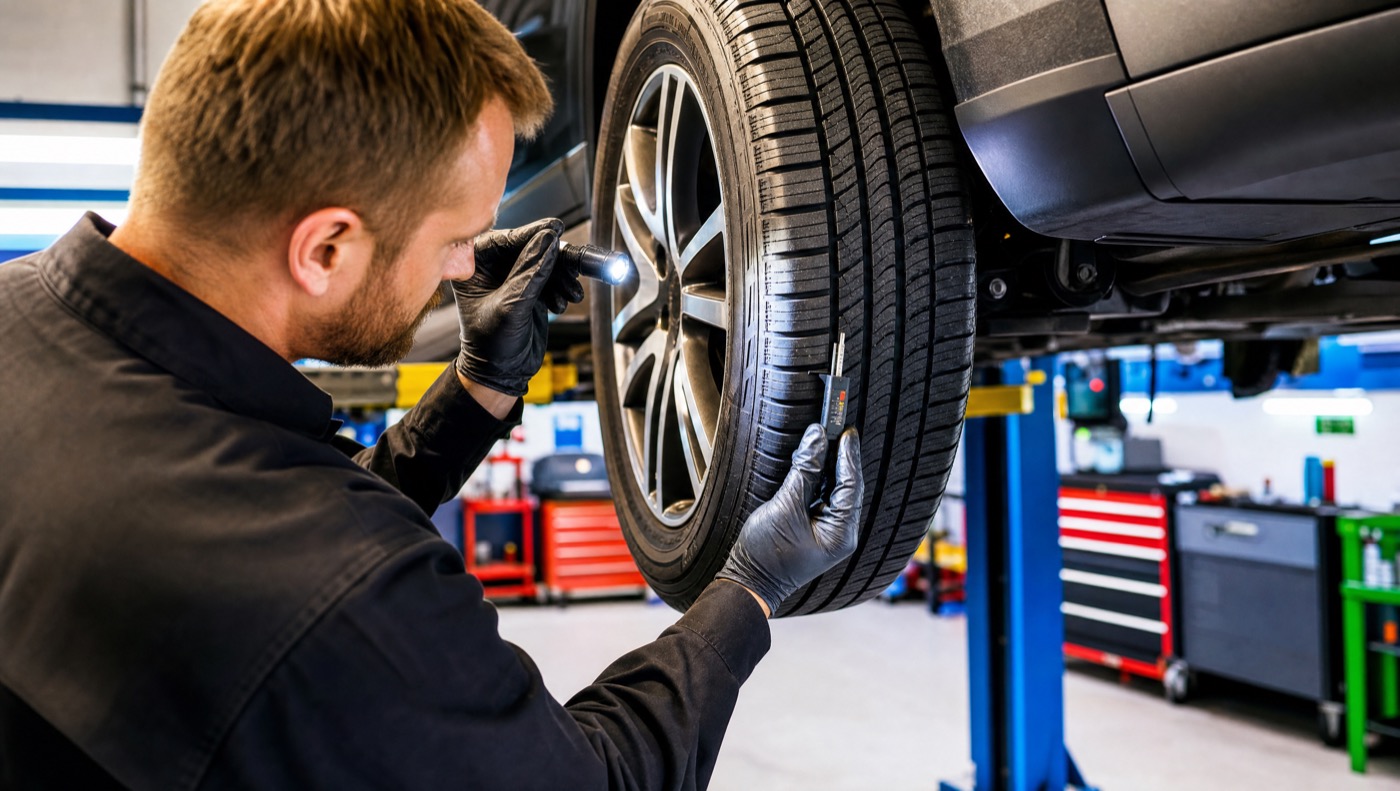
7. Tyres as a set, including dates
Four tyres of four different brands and three different ages tells you about the previous owner as much as about the rubber. Uneven wear on one edge points at alignment, or at the bushes above. Run-flats, common on BMW, hide shoulder wear behind a stiff sidewall.
8. Evidence of repair
Panel gaps, paint depth readings, overspray, fastener marks, replaced clips, a bonnet that has been off. None of this means the car is bad. It means there is a history nobody volunteered, and you are entitled to know it before you pay.
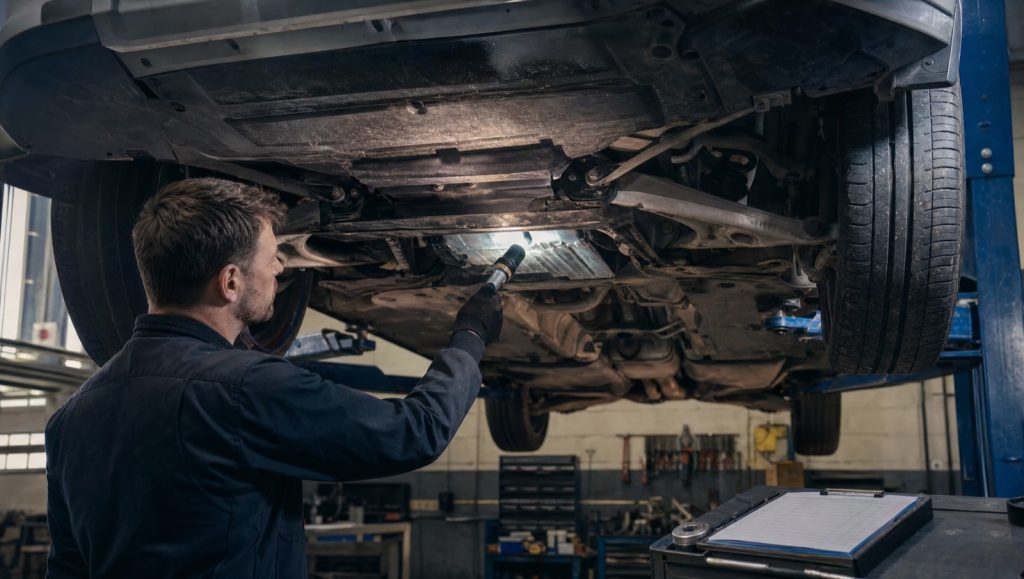
9. Underbody and structure
Rust in structural areas, damaged undertrays, crushed sills from bad jacking, and evidence of a car that has been hitting things it should not. Sydney speed humps and steep driveways leave marks on low cars, and those marks tell you how the previous owner drove.
10. The gearbox, warm and in traffic
A DSG or ZF automatic behaves differently cold and warm. We drive it in both states, watching for the hesitation pulling away, the shudder between first and second, and the jerk on the 2-1 downshift. Those three symptoms in a car with no gearbox service history are a specific and expensive conversation, and they are covered on our transmission page.
11. Electrical behaviour, including battery health
State of health, not just voltage. A weak battery on a modern European car produces faults across the whole vehicle that look like everything except a battery. We also check whether the modules are going to sleep properly, because a parasitic drain is a fault you inherit with the car.
12. What the car should cost you next
The last check is not a check, it is arithmetic. We put the findings into two lists: what the car needs now to be safe and reliable, and what it will need within twelve months. Timing belt or chain condition, upcoming brake and tyre replacement, gearbox service due, suspension items on the way out.
That second list is what most buyers have never seen, and it is what turns a price into a real price.
What you do with the report
You get it in writing, with a quote for anything we found, and you decide. Three outcomes are all normal.
The car is sound and you buy it with confidence. The car needs work and you go back to the seller with a specific, itemised number rather than a vague “it needs some things”. Or the car has a fault serious enough that the right answer is to keep looking, which we will say plainly, because a report that never says no is not worth commissioning.
We do not use the inspection as a funnel into work you did not ask for. If you buy the car and want the recommended repairs done here, everything carries our 1 year / 10,000 km workshop guarantee, but that is your call and it is quoted separately.
The inspection this is not
A pre-purchase inspection is a different job from the annual eSafety check your registration needs. That one is a minimum safety standard on the day: tyres, brakes, lights, steering, seat belts, windscreen. A car with a tired gearbox, an oil leak and a fault memory full of stored codes can hold a perfectly valid eSafety report.
Both are done here, and both are explained on our inspection page. They are quoted separately because they are not the same work and they answer completely different questions.
Booking it in Artarmon
We are an independent European workshop, not a dealership, minutes from Chatswood, St Leonards and Crows Nest. Book the inspection in your name, bring the car in or arrange the time with the seller, and tell us the make, model and year so the right technician and the right software are ready.
If you can, book before you have emotionally bought the car. The report is much easier to act on when you are still choosing between two.
Common questions
Why we measure instead of estimating
Almost every recommendation we make comes with a number attached. Brake pad and disc thickness in millimetres against the manufacturer minimum, tyre tread by corner with the wear pattern noted, battery state of health, and coolant strength.
That matters because a pad at 5 mm and a pad at 3 mm both look fine through a wheel and mean completely different things for your next six months. With the number in front of you, you can decide whether to act now or at the next service instead of taking a verdict on trust.
It is also what lets us tell you honestly that something can wait. A workshop that never says that is not measuring.
Booking in Artarmon
The workshop is at 1/39 Hotham Parade, Artarmon NSW 2064, minutes from Chatswood, Lane Cove, St Leonards and Crows Nest. We are appointment only, which means the technician who starts your car finishes it rather than moving between six jobs.
Send us the rego and the odometer, or a photo of the service screen in the car, and we will tell you exactly what is due before you commit to anything. If the car is not drivable, call 1300 136 825 and we will work out the fastest option.
You see the quote before anything is touched, nothing happens without your approval, and every job is backed by a twelve month or 10,000 km guarantee.
How long does an inspection take?
Plan on a few hours with the car here. Most of the work is on the hoist with the diagnostic software connected, and rushing it is how things get missed.
Can the seller be present?
Yes, and it is often easier that way. The report still goes to you, because you are the one commissioning it.
What if the car fails badly?
Then the inspection just paid for itself several times over. We will tell you plainly what we found and why we would walk away.
Do you inspect cars you did not previously service?
Almost always, that is exactly the case. We have no history with the car, which is the point: the report is based on what the vehicle shows us on the day.