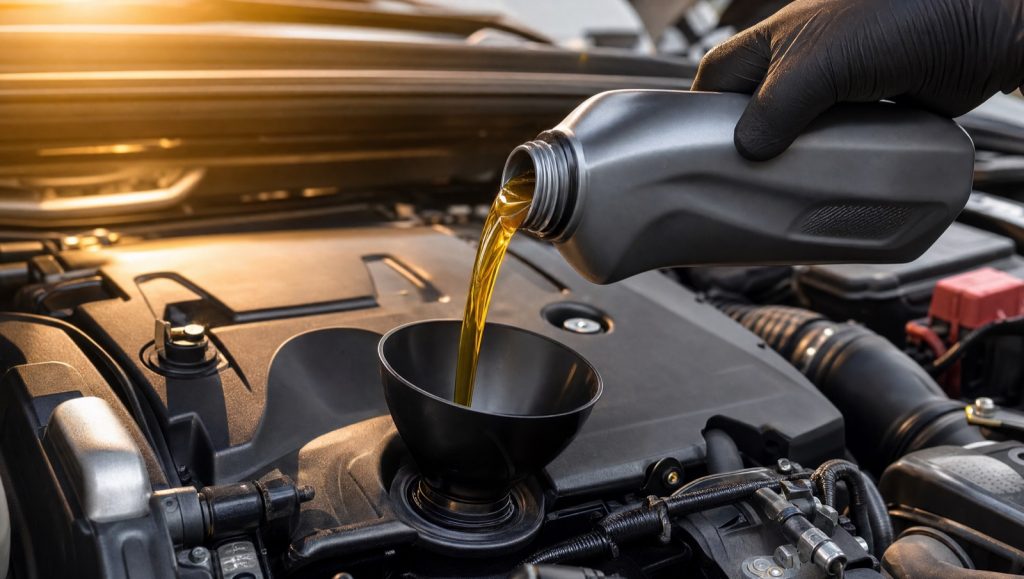
An oil change is the cheapest thing you will ever do to a European car and the easiest place to be quietly ripped off. Not on price, on specification. The number that matters is not the viscosity on the front of the bottle, it is the manufacturer approval on the back, and an oil can carry the first without the second.
Here is what those approvals actually protect, what happens on an engine that never gets one, and why the climate here shortens every margin involved.
Viscosity is not the specification
5W-30 describes how the oil flows cold and hot. It says nothing about the additive package, the ash content, the shear stability or how the oil behaves after twelve months in a turbocharged engine.
Manufacturer approvals exist because those properties are what the engine was designed around. VW 504 00 and 507 00, BMW Longlife-04, Mercedes 229.51, Porsche C30: each of those is a test regime an oil either passes or does not. Two bottles marked 5W-30 can be entirely different oils, and only one of them belongs in your car.
What the approval is protecting
The turbocharger. A turbo bearing spins at enormous speed and is cooled by oil. On shutdown, the oil sitting in that bearing housing is subjected to heat with no flow. An oil not built for it coke, and coked oil is what blocks the feed line on the next start.
The timing chain. Modern European engines run chains rather than belts, and chains rely on oil pressure and cleanliness. A stretched chain is one of the more expensive noises an engine can make, and it is preceded by years of oil that could not keep the tensioner clean.
The particulate filter, on diesels. Low-ash oil exists because ash does not burn off during regeneration. It accumulates in the filter permanently. Use a non-approved oil and you are physically filling a part that costs four figures to replace.
The extended interval itself. Longlife approvals are what make a 15,000 or 30,000 km interval survivable. An oil that fails the approval may be perfectly adequate for 5,000 km and completely finished by 12,000, and nothing on the dashboard will tell you.
What Brisbane does to the margins
Every assumption behind a service interval was made in a cooler climate with longer average trips. Three local factors work against them.
Sustained heat. Higher ambient temperature means higher oil temperature, and oxidation roughly doubles for every ten degrees. An oil doing 15,000 km here has worked harder than the same oil doing 15,000 km in a cooler city.
Humidity. Water is the other enemy of oil. It enters as condensation, and it is boiled off when the engine reaches full operating temperature. In a humid climate there is more of it to start with.
Short trips. Which is the part that closes the loop. An engine that never reaches full operating temperature never boils that moisture off, so it stays in the oil, forms acids, and attacks bearings over years rather than months.
That combination is why we recommend the fixed interval over the flexible one for cars that live around the inner north, even when the car is set to LongLife and the counter says otherwise. The extra cost over three years is small. What it protects is not.
What a proper oil service includes
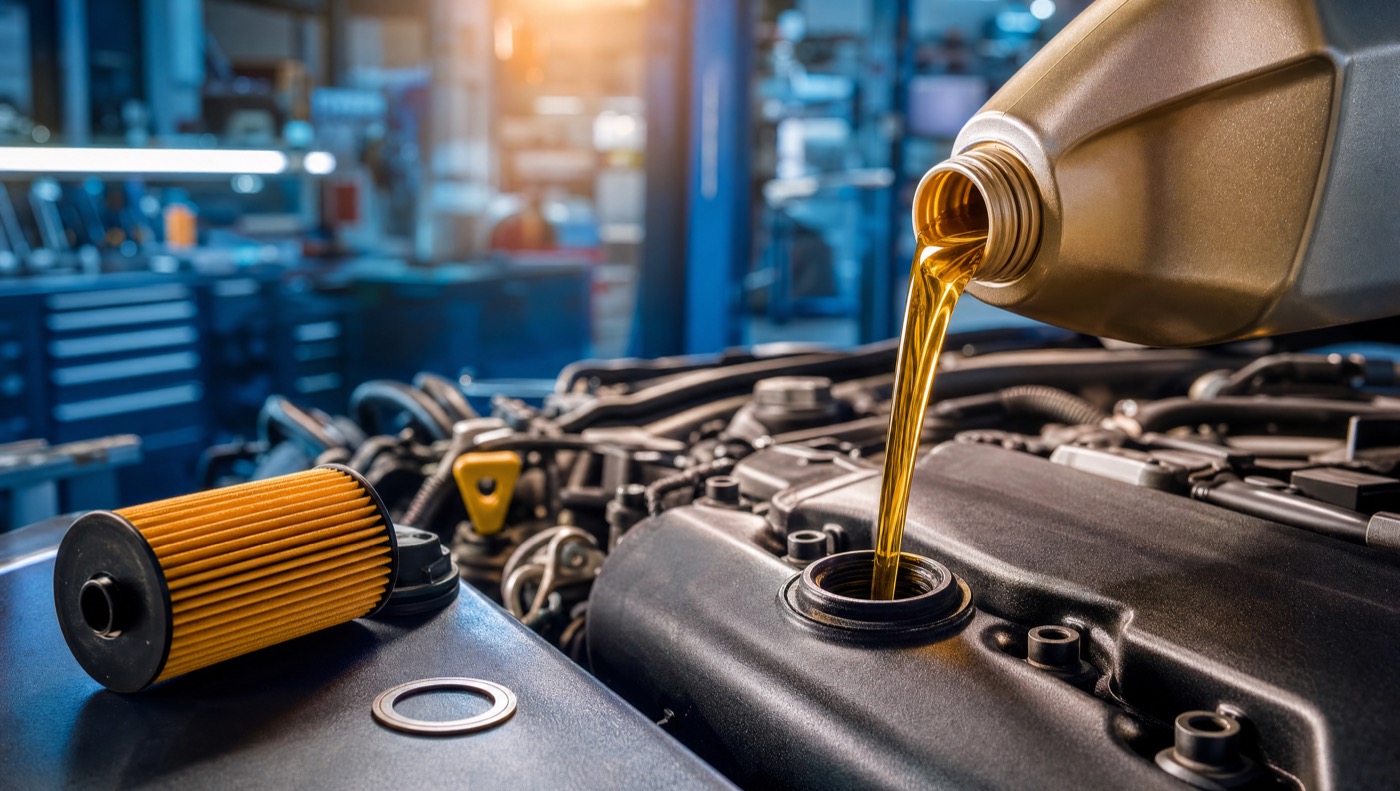
- Oil drained hot, so what comes out takes the suspended contamination with it.
- The sump plug sealing washer replaced, not reused.
- A new filter element with its o-rings, not a wipe and refit.
- The correct approved oil, refilled to the exact quantity for that engine, measured rather than eyeballed.
- Service counters reset properly through the diagnostic system.
- The service written digitally against the VIN, with the oil specification on the invoice.
That last point is the one you can check. If an invoice says “engine oil” without a specification, you do not know what went in your car.
The signs an engine has been running the wrong oil
None of them are dramatic, which is the problem.
A cold start that rattles for a second longer than it used to, which is the timing chain tensioner taking longer to load. Oil consumption that has crept up over a year. Sludge visible in the filler neck. On a diesel, a particulate filter that reaches its ash limit thousands of kilometres earlier than expected. And on any turbocharged engine, a whistle or lag that was not there last year.
Any of those on a car with an unclear service history is worth a conversation before it is worth a repair.
“Can I just top it up with whatever the servo has?”
In an emergency, a litre of the wrong 5W-30 will not destroy your engine, and running the engine low on oil absolutely will. So yes, in that situation, top it up and get it changed properly afterwards.
What is not fine is doing that as a habit. Repeated top-ups with a non-approved oil dilute the approved oil in the sump until the mixture no longer meets anything, and on a diesel the ash is going into the filter either way.
What we do differently
Nothing exotic, just checked rather than assumed. We confirm the approval required by your engine from the VIN rather than the model year, because manufacturers change specification mid-generation. We record consumption between services, so a trend becomes visible instead of a surprise. And on diesels we check filter load and oil dilution at every service, because in a short-trip city that number is often the most useful thing we can tell you.
The full list of what an oil and filter service includes is on our oil service page.
Booking it in Albion
We are an independent European workshop at 21 Pedder St, Albion, ten minutes from Ascot, Hamilton and Newstead, and not a dealership. Tell us the model, year and engine when you book so the right oil is on the shelf rather than the closest thing to it.
Every job carries our 1 year / 10,000 km workshop guarantee, and the full list of what we do is on the Brisbane services page.
Common questions
What Brisbane conditions do to the schedule
Manufacturer schedules assume average conditions, and Brisbane is not average. Heat is hard on batteries, cooling systems and rubber, and humidity finds its way into earth points and low-mounted connectors.
Short suburban trips are the other half of it: an engine that never runs long enough to get fully warm accumulates moisture and fuel dilution in the oil, and on a diesel the particulate filter never completes a proper regeneration.
For cars living that way we usually recommend servicing on the shorter side of the manufacturer window. It is a recommendation with the reasoning attached, not a rule.
Parts, fluids and the approval that matters
We fit genuine OEM parts by default and use oil carrying the manufacturer approval for your engine rather than simply the right viscosity. The approval governs additive chemistry, ash content and shear stability, which is what decides how long a particulate filter or a timing chain lasts.
Where a quality equivalent makes sense for a specific job we explain the difference and let you choose rather than deciding for you.
Every part number and fluid specification is recorded on the invoice, which is what makes the service history hold up later.
Booking in Albion
The workshop is at 21 Pedder St, Albion QLD 4010, minutes from Hamilton, Teneriffe, Newstead, Ascot and Clayfield. We are appointment only, so the technician who starts your car finishes it.
Send us the rego and the odometer, or a photo of the service screen, and we will tell you exactly what is due before you commit to anything.
You see the quote before anything is touched, and every job is backed by a twelve month or 10,000 km guarantee.
What you get back with the car
A stamped logbook where the car has one, an itemised invoice showing parts by number and fluids by specification, and the service written into the car’s own record where the manufacturer keeps one.
Plus a short written list: what is fine, what is wearing with the measurement beside it, and what will need attention in about six months. That last list is the part most owners tell us they had never been given before, and it is what turns car maintenance into something you can plan for rather than react to.
If anything on that list is urgent we say so plainly, and if it can wait we say that too.
Is a more expensive oil always better?
No. The right oil is the one carrying your engine’s approval. An expensive oil without it is still the wrong oil, and a sensibly priced one with it is correct.
How do I know which approval my car needs?
We confirm it from the VIN rather than the model year, because specifications change mid-generation. It takes a minute and it is on the invoice afterwards.
Should I use the long interval my car allows?
Not if the car does short trips in this climate. We recommend the fixed interval for most cars around the inner north, and we will explain why for yours specifically.
My car uses a little oil between services. Is that normal?
On some European engines, yes. What matters is the trend, which is why we record consumption at each visit rather than judging it once.