Volkswagen is the most searched European make in Brisbane, and it is also the one where the gap between what the car needs and what the owner is told is widest. A Golf, a Tiguan and an Amarok share a badge and almost nothing else on the service sheet. If you are booking a service and you want to know what you are actually paying for, this is the honest version.
We service Volkswagens every week at our Albion workshop, ten minutes from Ascot, Hamilton and Newstead, and the same three questions arrive on the phone: what does my car need at this interval, why is the price different from the quote my neighbour got for the same model, and will the warranty survive if the dealership does not do the work.
Fixed or flexible: your car has already decided
Volkswagen Australia runs two service regimes, and which one your car follows was set when it was built. Fixed servicing means a visit every 12 months or 15,000 km, whichever comes first. Flexible, or LongLife, means the car itself decides, using oil quality sensors and driving data, and can stretch to 24 months or 30,000 km on paper.
The word “on paper” is doing a lot of work in that sentence. LongLife intervals were designed around long, steady driving at consistent temperatures. Brisbane traffic is the opposite of that: short trips, stop-start along Sandgate Road, high ambient temperature for eight months of the year, and an engine that often never reaches full operating temperature before it is switched off again. A car doing that pattern on a flexible schedule is running oil far harder than the interval assumes.
Our position is simple and we will say it before you book: if your Volkswagen lives in city traffic, we recommend servicing it on the fixed interval even if the car is set to flexible. The cost difference over three years is small. The cost of a turbo bearing or a timing chain tensioner is not.
What actually happens at a Volkswagen service
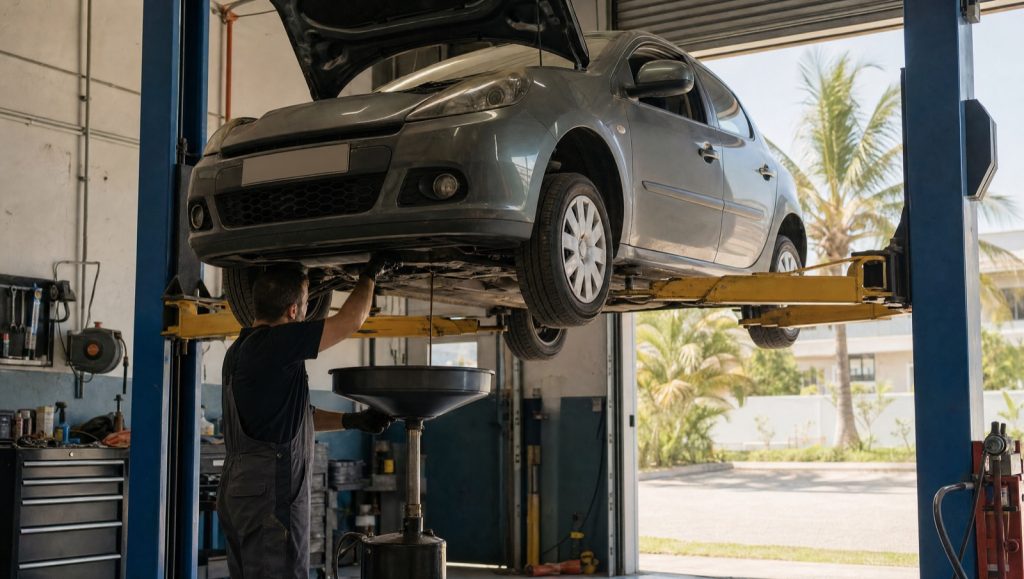
An oil service on a modern VW is not a drain and refill. Done properly it means:
- Oil drained hot, sump plug sealing washer replaced, and the correct VW-approved grade refilled to the exact quantity for that engine. The approval number on the bottle matters more than the brand on the label.
- A new oil filter element with its o-rings, never a wipe and reuse.
- Cabin and air filters checked, and replaced on schedule rather than on sale.
- Service interval display reset through the diagnostic system, so the car knows the work was done.
- A full fault memory scan across every module, which is where problems show up months before they become symptoms.
- A digital record written against the VIN, which is what replaces the stamp in the old paper book.
The approval point is worth expanding, because it is where cheap servicing does its damage. VW 504 00 and 507 00 exist because the oil has to reach a turbo bearing on a cold start and still protect the engine twelve months later, and because the diesel particulate filter cannot tolerate the ash that a non-approved oil leaves behind. An oil that meets a generic viscosity but not the VW approval will not fail immediately. It will fail expensively, later, and nothing on the invoice will connect the two events.
DSG: the service most owners miss entirely
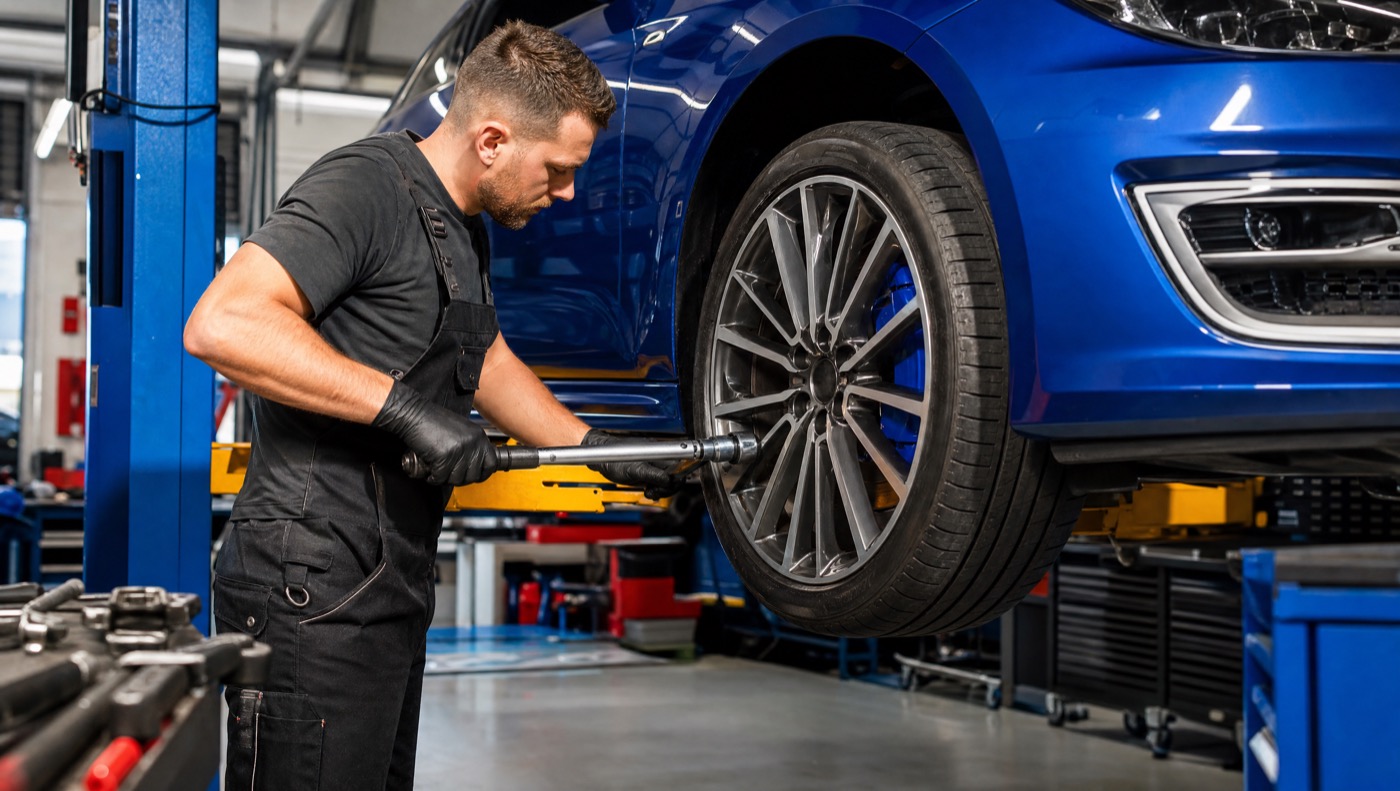
If your Volkswagen has a DSG gearbox, it has a service schedule of its own, and it is the single most skipped item we see. The wet-clutch DSG needs its fluid and filter changed at roughly 60,000 km. That is not a suggestion buried in fine print, it is a maintenance operation, and skipping it is how a gearbox that would have run for 300,000 km becomes a mechatronic unit failure at 120,000.
The symptoms arrive in a predictable order. First a hesitation pulling away from a standstill, the kind you notice at a set of lights and then forget about. Then a shudder between first and second under light throttle. Then a jerk on downshifts as you slow down. By the time a warning light appears, the cheap version of this repair has usually passed.
If any of that sounds like your car, it is worth a look at our transmission service page, and worth booking before the next long drive rather than after.
Model by model, what changes
Golf. The most common VW through our workshop. On the 1.4 and 1.5 TSI engines the water pump and thermostat housing are a known wear point, and the first sign is usually a coolant level that drops slowly with nothing visible on the driveway. We pressure test rather than top up and hope.
Tiguan. Same engine family, more weight, and in Brisbane almost always with the air conditioning working hard. Cabin filters clog faster here than the interval assumes, and a restricted filter makes the whole climate system work harder for a worse result. It is a cheap part that gets ignored for years.
Amarok. A different animal. Diesel particulate filter regeneration needs sustained driving to complete, and an Amarok that only does short runs around the northern suburbs will accumulate soot faster than it can burn it off. The first symptom is often not a warning light but an oil level that appears to be rising, because unburnt fuel is finding its way into the sump. We check filter load and oil dilution at every service on these, and if the numbers are heading the wrong way we will tell you which driving pattern fixes it before you spend money on parts.
Passat and Arteon. Heavier cars on the same platform, with brake systems that wear on a different curve and, on many of them, an electronic parking brake that has to be retracted through the diagnostic system before pads can be changed. It is a small thing that separates a workshop with the right software from one without it.
Independent, not the dealership
Plenty of people searching for a VW service in Brisbane are looking for a dealership, and for two jobs they should be: recalls and repairs under the factory warranty are done there at no cost. Routine servicing is open to any qualified workshop, and the practical differences are in how the visit is quoted and who you deal with. We read the service data and quote what your car is due for at that interval, and the technician who reads the car is the one you speak to.
For DSG cars there is a second difference. The fluid service needs the adaptations reset through the diagnostic system afterwards, and that step is the one most often skipped by workshops without the software. We do it as part of the job, not as an extra.
Does servicing outside the dealership void the warranty?
No, and this is the question we answer most often. Under Australian Consumer Law, a manufacturer cannot require you to service at their dealership to keep your factory warranty valid. What they can require is that the work is carried out to the manufacturer’s schedule, with parts that meet specification, by someone qualified, and that it is documented.
That is exactly how we work. Genuine or OE parts, fluids to the exact approval, the manufacturer’s own operation list for that interval, and an itemised invoice with part numbers on it. Every service we carry out also carries our own 1 year / 10,000 km workshop guarantee, which is a separate promise from the factory warranty and sits on top of it.
What the service history is worth when you sell
There is a financial argument for doing this properly that has nothing to do with how the car drives. When you sell a Volkswagen in Brisbane, the buyer or the dealer taking it in trade asks for the service history, and a complete record with dates, kilometres and itemised work is worth real money against a partial one. We have seen the same model, same year, same kilometres, separated by thousands of dollars on the strength of the paperwork alone.
That is why every invoice lists parts by number, fluids by specification, and the operations carried out. It is the record you hand over on the day you sell the car, and it is also the record that settles any warranty argument long before it becomes one.
Signs your VW should come in before the next service
The service interval is a schedule, not a promise that nothing will happen in between. A few symptoms are worth booking for straight away rather than waiting for the reminder on the dash.
- A coolant warning or a level that keeps dropping. On the TSI engines this is usually the water pump or thermostat housing, and it is far cheaper caught early than after the engine has run hot.
- Hesitation or a shudder pulling away on a DSG car. It is the first stage of the pattern described above, and the stage where a fluid service with an adaptation reset still fixes most cases.
- The engine fan running hard after a short trip on a diesel. Often the particulate filter trying to finish a regeneration, which tells us something about how the car is being driven.
- Slow cranking on a hot morning. Heat ages batteries quickly here, and a weak battery produces faults across the whole car that look like anything except a battery.
Booking, and what we need from you
We are an independent European workshop in Albion, not a dealership, and we work by appointment so every car gets a specialist’s attention rather than a queue position. When you book, tell us the model, the year and the engine, because the parts we order the day before are not the same for a 1.4 TSI Golf and a 2.0 TDI Amarok.
If you are not sure what your car is due for, bring it in for a check rather than guessing from the odometer. Reading the service data takes minutes and it is the only honest way to answer the question. You can see the full list of what we do on the Brisbane services page, or book directly on the Volkswagen booking page.
Common questions
My car is set to flexible servicing. Should I switch to fixed?
If it spends most of its life in Brisbane traffic doing short trips, yes. Flexible intervals assume long, steady driving, and city use ages the oil faster than the counter expects.
When does the DSG need its fluid changed?
Around 60,000 km on the wet-clutch units. It is a scheduled operation and skipping it is the most expensive shortcut available on these cars.
Do you service Volkswagens still under factory warranty?
Every week. Australian Consumer Law protects exactly that case, provided the schedule, the parts and the paperwork are right, which is how we work anyway.
How long does a service take?
An oil service is usually a half day. A full service with brakes or a DSG fluid change is normally a full day, and we will tell you before you leave the car, not after.
Do I need to go to the VW dealership for a recall?
Yes. Recalls and warranty repairs are done by the dealership at no cost to you. Routine servicing can be done by any qualified workshop, and if we find an open recall on your car we will tell you.